
Diana Nyad swims less than two miles off Key West, Fla., on Monday.
Andy Newman/AFP/Getty ImagesDiana Nyad's successful swim from Cuba to Key West on Monday was made all the sweeter because she had tried — and failed — four times before.
She learned you should "never, ever give up," but she also learned some practical lessons to help beat the elements in those earlier attempts. Out of failure, she innovated. And out of innovation, she succeeded.
"In my interviews with explorers, over and over again, so many of them said, really, the only failure that counts is dying," says National Geographic staff writer, Hannah Bloch, wrote about failure for the September issue of the magazine.
Up And Away
Bloch tells All Things Considered host Jacki Lyden about the 19th-century Swedish patent clerk who became a polar aeronaut and national hero, Salomon August Andrée.
"This was an era when the arctic and the North Pole were really unchartered territory. And many people had tried to reach the North Pole overland and had died trying," Bloch says.
To circumvent the challenges of others, Andrée took a completely different path: He decided to fly there in a hydrogen balloon. The idea was so bold that he even convinced the King of Sweden and Alfred Nobel to back his project. He and a small crew took flight on July 11, 1897.
Members of S. A. Andrée's 1897 journey survey their downed vessel. This photo was recovered from a camera when their remains were found 33 years later.
Courtesy of Grenna Museum, Andréexpeditionen Polarcenter/Swedish Society for Anthropology and Geography/National Geographic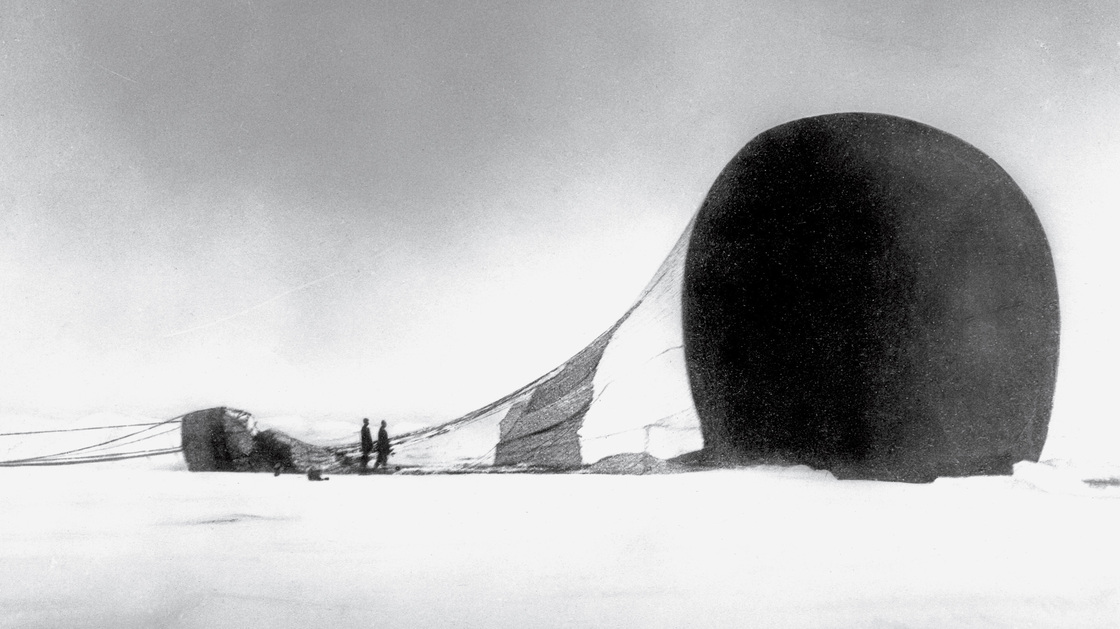 Members of S. A. Andrée's 1897 journey survey their downed vessel. This photo was recovered from a camera when their remains were found 33 years later.Courtesy of Grenna Museum, Andréexpeditionen Polarcenter/Swedish Society for Anthropology and Geography/National Geographic
 They never made it to the North Pole; their remains were discovered some three decades later. The tuxedo he'd brought along to wear on his triumphant return remained packed away, unused.
But their failure served as motivation for many other polar aeronauts. Italian explorer Umberto Nobile eventually made the first successful trip in 1926. He, too, traveled by air, but flew a dirigible instead of a hydrogen balloon.
Coming Back From The Edge
It took others' persistence to learn from Andrée's mistakes, just as he had learned from those before him. Some risk-takers, though, are fortunate enough to learn from their own failures.
American anthropologist primatologist Agustin Fuentes, for example, changed the course of his career after getting lost in the jungles of Borneo.
Fuentes had been trekking deep into the jungle to catch a glimpse of the elusive maroon leaf monkey when he realized he was in trouble. Being lost was dangerous in a region full of leopards and venomous snakes.
"I was actually helped out of the jungle by an orangutan who came down, got me, and walked me back into camp," he said in a Google+ Hangout sponsored by National Geographic.
Primatologist Agustin Fuentes turned his sights on the macaque after getting lost in search of a much more elusive monkey.
Lintao Zhang/Getty Images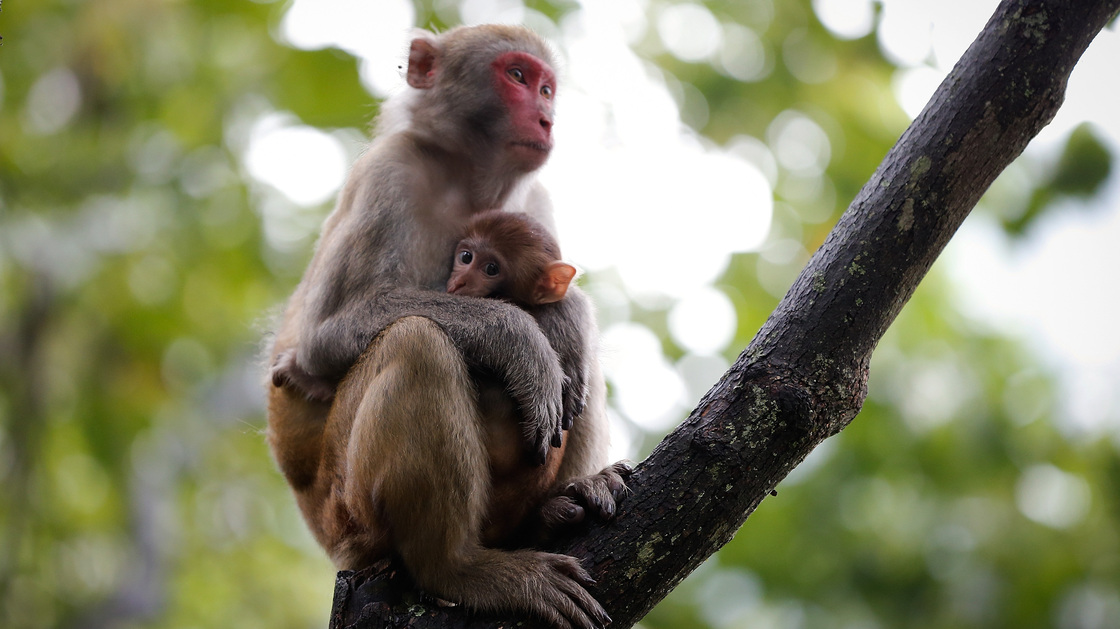 Primatologist Agustin Fuentes turned his sights on the macaque after getting lost in search of a much more elusive monkey.Lintao Zhang/Getty Images
 "But the punch line here is that early in my career, I wanted to study those things on the edge, the last remaining members of a species or something like that," Fuentes says. "I failed, so my experience there gave me the hint that ... maybe what you should be looking at is not these last few things living out there, but those primates that do OK with people."
Since then, Fuentes has made a successful career researching a much less timid primate: the macaque.
"Think about what the world would look like if there was no such thing as failure," National Geographic's Bloch says. "What would be the point of doing anything? I think failure gives it what gives success its meaning."
