Showing posts with label inside. Show all posts

Wednesday, 4 September 2013

How To Build Little Doors Inside Your Shell: The Secrets of Snail Carpentry

"I am going to withdraw from the world," says a snail in Hans Christian Andersen's tale The Snail and the Rosebush. "Nothing that happens there is any concern of mine."

Snail 1 Robert Krulwich/NPR

In the fall, snails get cold. They sense the days getting shorter so they prepare for what's coming. You'd expect them to, of course, but it's how they do it that surprised me. Until I read Elizabeth Tova Bailey's new snail book, I hadn't a clue. They begin by slipping into their shells ...

Robert Krulwich/NPR In the fall snails sense the days getting shorter so they prepare for what's coming.
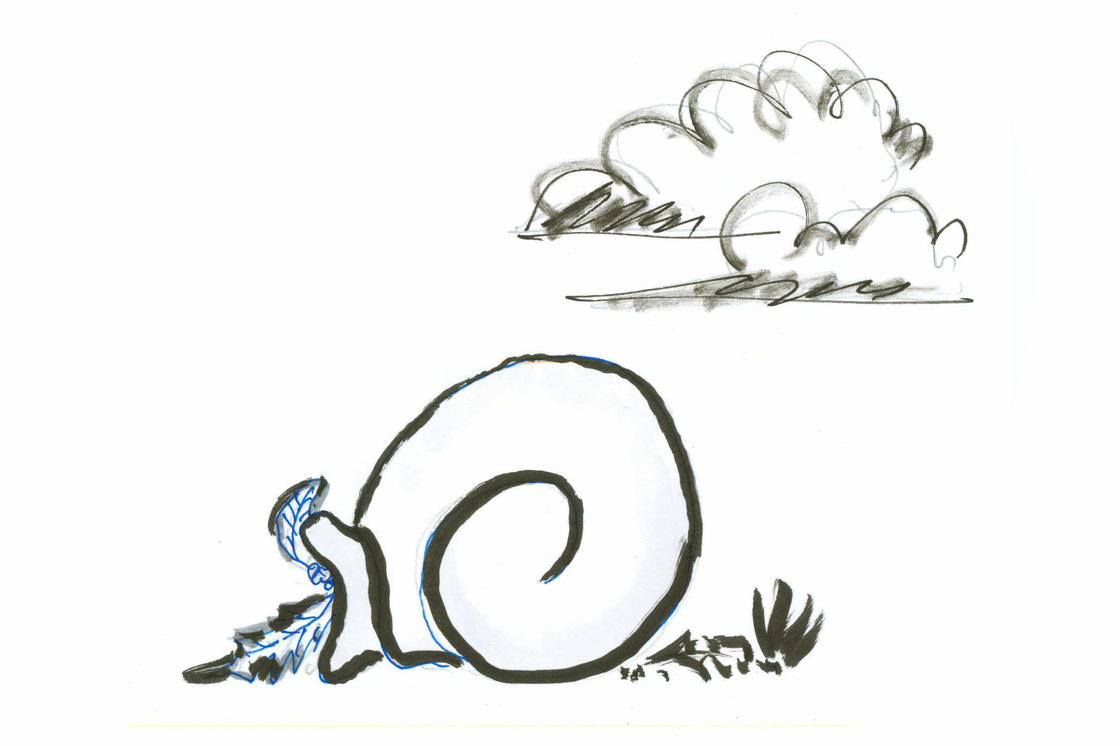
... head in, foot last. And then they start building doors. Not doors of wood or stone or soil. Being snails, they choose mucus.

The goopy ooze they use for locomotion is also a sticky attractant, so using their feet (sorry, "foot"), they pick up bits of stone, leaf and soil, and, according to the Rev. William Kirby, who described this back in 1835, using that foot "as a shovel to make its mortar ... [as] a trowel to spread it evenly," they build a door. They seal the entrance to their shell in a manner something like this ...

Snail 2 Robert Krulwich/NPR

Snail scholars call this door an "epiphragm." Depending on the species and the harshness of the winter, a snail might make it thick or thin, or in some cases, it may make several of them, as described by Ernest Ingersoll in his 1881 essay, "In a Snailery."

"Withdrawing into the shell, the animal throws across the aperture a film of slimy mucus, which hardens as tight as a miniature drum-head. As the weather becomes colder, the creature draws itself a little farther in, and makes another 'epiphragm' and so on until ... the animal [is] sleeping snugly coiled in the deepest recesses of his domicile."

I imagine if you could X-ray a snail shell, you might see — if it's an especially cold winter — a series of doors within doors within doors ...

Snail 3 Robert Krulwich/NPR

These slime plates, according to the anonymous author of "Snails and Their Houses" (1888), "act on the principle of double windows, enclosing a layer of air between each pair, and so effectually protecting [the snail] from the cold."

Breathing? Eating? Pooping?

So how then, does an enclosed snail eat, defecate or breathe? The answer is: It slows itself way down. Whether dormant or hibernating, it stops eating, its heart rate goes to barely a beat or two a minute and, writes Elisabeth Tova Bailey, "its oxygen intake diminishes to one-fiftieth of its active use." As for defecation, I'm guessing some things they just live with.

I do worry about suffocation, though. Three doors in, buried in its hard shell, where is the snail to get any oxygen? Well, says Elisabeth, the doors may be porous to air, or "(s)trategically located breathing holes may be incorporated." However they do it, and different snails do it differently, when it starts to rain and snow, the snail is snug, warm and protected. Ready for winter.

Robert Krulwich/NPR Snail 4
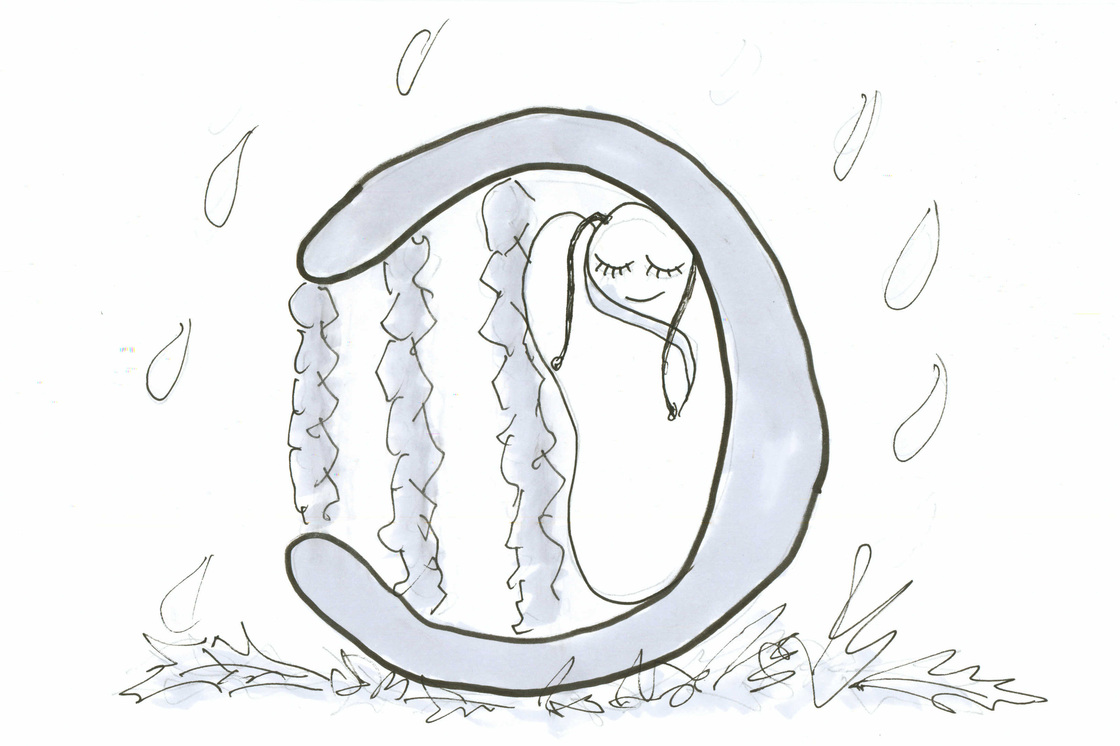
Then months later, when temperatures rise and the sun stays longer in the sky, the snail somehow senses springtime coming, breaks down its doors and steps out for a stretch and another season of crawling, eating and, with a little luck, loving. It all happens slowly, of course, but it happens year after year. Doors are built. Doors are de-doored, the dance goes on, snail-style.

———————————————————————————————————-

Elisabeth Tova Bailey's book is The Sound of a Wild Snail Eating. I've blogged about it before (when I learned that snails have teeth). The citations to old books in my post, I got from her. In her chapter about hibernation, she notes that making these mucus doors relieves snails of the chore of migrating — and then she tries to imagine a hibernating snail. What a concept! That gets her thinking about a French poet, Jacques Prevert, whose "Song of the Snails on Their Way to A Funeral" tells the story of "two snails that plan to attend a service for an autumn leaf that has fallen to the ground. They travel toward their destination, and when they finally arrive for the funeral, spring has come and all is happy again." Ah, sometimes things just work out.


View the original article here

Tuesday, 20 August 2013

Review: Plants vs Zombies 2 sticks to its roots, but paywall leaves us feeling dead inside

A man wearing a steel pot for a hat tells you that he wants to enjoy the taco he just ate again, so he's going back in time with the help of his talking camper. That's essentially the plot of Plants vs. Zombies 2, the long-awaited sequel to the much beloved tower defense game that pits vegetation against the undead. This time your adventures in gardening take you to Ancient Egypt, 17th-century pirate-infested waters, and eventually the Old West. Despite a freemium model that nearly spoils the crop, PvZ2 is still a blue-ribbon mobile title with a charm and humor that is beyond garden-variety.

Plants vs Zombies 2 eschews the linear formula of the first-game for a more classic board game format. While you’ll still deploy little planted peapods and sunflowers to confront rows of bumbling zombies, the levels exist in a larger world now and beating a stage unlocks another along the path. There are forks in the road that let you decide how you'd like to proceed, and even keys to find that open up new areas. Ultimately your goal is to work your way to a star gate which takes you to the next world.

The pirate-themed world in PvZ2

Instead of simply defeating several sequences of increasingly complex and uniquely-powered zombies, the main campaign has some welcome variety in “last-stand” challenges, maps with specific restrictions, and new world-specific enemies. You’ll slay tombstone-raising zombies in Egypt and later confront undead sea captains with their nefarious parrots and rope-swinging brethren. While the pacing suffers into lulls at times, the overall experience is more varied and full than the original, thanks in large part to the scale: Now you’re no longer just a homeowner, you’re a time-traveling adventurer.

To respond to these new threats and challenges, your botanical arsenal has been augmented with bloomerangs, coconut cannons, iceberg lettuce, and adorable “spring” beans among others. The character design is as charming as ever, with the plant almanac full of chuckle-inducing introductions and adorable biographies. The art is also much improved over the first first title, with superior animations, worlds, and environmental effects.

Your green thumb also gets a huge upgrade: Now you can also feed your plants special plant food that will give them temporary boosts. Sunflowers spit out a huge amount of sun, while peashooters suddenly become gatling-gun-like repeaters that level everything in their path. Experimenting with the different upgrades and unleashing them in timely fashion is one of the best new elements of Plants vs Zombies 2.

Familiar faces make an appearance, but there are plenty of new plants to play with, too.

One element that doesn’t feel quite at home is the new god-like powers that you can now utilize. While before you were merely a homeowner with an undead problem, time travel somehow gave you the ability to flick zombies off screen, pinch their heads, or strike them dead with lightning. While relatively easy to deploy via the touchscreen, they make any mission a near-walk due to their sheer power. Thankfully, they’re somewhat expensive to purchase using the in-game currency, but if you’re willing to throw down real money, you’ll find the game much, much easier.

This ability to pay money to make the game easier is a common trope of modern iOS games, but with PvZ, a franchise that prides itself on strategy and clever-thinking, such free-passes seem blasphemous. The main issue players will have with PvZ2 is likely dependent on how much they care about the freemium model’s awkward game balance issues. Developer PopCap had to satisfy fans of the series who have come to expect certain gameplay elements, while publisher EA likely pushed for every opportunity to squeeze more money from the player. The result is a game that can be completed without paying, but seems to punish you in every way imaginable if you choose not to.

The game's in-app purchases aren't exactly a high-point.

If you’re playing without paying, you’ll see many of your favorite plants locked away behind paywalls ($3 for squash!?), you’ll have to trudge through levels again and again to mine for stars (which are used to open star gates), and you’ll be handicapped in the use of your super powers. The game is simply a much longer, thinner, and monotonous experience if you decide to keep a tight hold on you wallet. Meanwhile, if you throw down some money, you can use your godlike powers with impunity, have access to the full arsenal of plants, and unlock new worlds instantly. But it’s not just a few dollars, it’s a lot of money: Unlocking every plant will cost you about $20, while unlocking a new world will cost you $5. It just feels like needlessly milking a fanbase that is already falling over itself to buy your game.

Despite my qualms with the freemium model, PvZ2 remains an exceptional, charming tower defense title that expands on the original while taking you in new and exciting directions. So strap on your steel pot helmet, grab some fertilizer: You’ve got some zombies to kill.


View the original article here